CHEVROLET CH5.3-18 Gm Block Engine L83
fits make: Chevy, Chevrolet. year: 2014–2020.
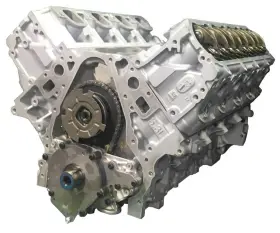
( Brand: Chevrolet ), ( Manufacturer Part Number: CH5.3-18 ), ( Type: Engine Long Block ), ( Manufacturer Warranty: 3 Years ), ( Engine Size: 5.3 L ), ( Number Of Valves: 16 ), ( Fuel Type: Gasoline )
Review CHEVROLET Remanufactured Chevy Gm 5.3 L83 Vin Long Block Engine fits 2014–2020
The Chevrolet 5.3-18 L83 block engine, produced by General Motors between 2014 and 2020, is a powerful and reliable powertrain solution for various applications. This engine is part of the small-block V8 family, which has been a staple of Chevrolet's lineup for decades.
The L83 engine is known for its impressive performance and durability. It features a displacement of 5.3 liters, or 327 cubic inches, and comes with a number of advanced design elements to enhance its efficiency and power output. The engine block is made of cast iron, providing excellent strength and durability.
One of the key features of the L83 engine is its Active Fuel Management (AFM) system. This technology allows the engine to operate on only four cylinders under light load conditions, reducing fuel consumption and improving emissions. When more power is needed, the system seamlessly switches back to eight cylinders, ensuring optimal performance.
The L83 engine also comes with a number of other advanced technologies, including variable valve timing, which optimizes engine performance across the entire RPM range. It also features a high-pressure direct fuel injection system, which improves combustion efficiency and power output.
The L83 engine is designed to be easy to install and maintain. It comes with a number of factory-installed features, such as a balance shaft system, which reduces vibration and improves smoothness. The engine also comes with a factory-installed oil cooler, which helps to maintain optimal oil temperature and prolong engine life.
In terms of dimensions, the L83 engine measures approximately 33.5 inches long, 31.5 inches wide, and 27.4 inches tall. It has a bore and stroke of 4.00 inches and 3.48 inches, respectively. The engine weighs approximately 500 pounds when fully assembled.
The L83 engine is a versatile powertrain solution, suitable for use in a variety of applications, including pickup trucks, SUVs, and commercial vehicles. It delivers impressive power output, with peak horsepower and torque ratings of 355 hp and 383 lb-ft, respectively.
In summary, the Chevrolet 5.3-18 L83 block engine is a powerful, reliable, and efficient powertrain solution produced by General Motors between 2014 and 2020. It features advanced technologies such as Active Fuel Management, variable valve timing, and high-pressure direct fuel injection, making it an excellent choice for a wide range of applications. Its durable cast iron block, easy installation and maintenance features, and impressive power output make it a top pick for those seeking high-performance engine solutions.
The Chevrolet 5.3-18 L83 engine, produced by General Motors between 2014 and 2020, is a popular choice for those seeking a reliable and powerful V8 engine for their vehicles. Here are some pros and cons to consider before making a purchase:
Pros:1. Power and torque: The L83 engine delivers impressive power and torque, making it suitable for towing heavy loads and providing a satisfying driving experience.
2. Fuel efficiency: Compared to earlier versions of the 5.3-liter engine, the L83 block boasts improved fuel economy, helping to save on operating costs.
3. Durability: Known for its robustness, the L83 engine is built to last, with many users reporting reliable performance even after extensive use.
4. Flex-Fuel capability: This engine is capable of running on E85 ethanol fuel, giving buyers the flexibility to choose between gasoline and ethanol depending on their preferences and availability.
Cons:1. Maintenance costs: While the L83 engine is durable, it does require regular maintenance to keep it running optimally. This includes tasks like oil changes, air filter replacements, and spark plug replacements.
2. Emissions system: Some users have reported issues with the emissions system on the L83 engine, which can lead to check engine lights and potential repair costs.
3. Limited availability: Due to its production ending in 2020, the availability of new L83 engines is limited, and buyers may need to look for used options or turn to aftermarket solutions.
In conclusion, the Chevrolet 5.3-18 L83 engine offers impressive power, torque, and fuel efficiency, making it an excellent choice for those seeking a reliable V8 engine. However, it does come with some drawbacks, such as maintenance costs and potential emissions system issues. Ultimately, the decision to purchase an L83 engine depends on your individual needs, preferences, and budget. If you can accommodate the additional maintenance costs and are willing to address any potential emissions system concerns, the L83 engine's power and durability may outweigh the cons. Alternatively, considering other engine options or opting for a newer engine with similar specifications may be worth exploring.
Details:
This finishing process is used by Prom to remove surface contamination such as rust and irregularities from engine blocks during re manufacturing. At this point the engine is primed with special lubricant and a new oil pump. This automatic honing machine takes any potential operator error out of the equation. The block now receives new lifters, push rods and rocker arms which are adjusted a second check completed by an assembly manager.
With twice the spraying power and a dramatically increased number of multi integrated spray nozzles, this state art system assures Prom that all oil, dirt foreign material is removed from even smallest oiling holes. The load is heated to 650-800 F 340-427C in an oxygen deficient atmosphere, where the combustible hydrocarbons decompose and parts leave oven completely dry. The result of this method is a cleaner smoother surface finish to make easy the detection and subsurface casting defects during quality inspection. Our high performance engines are built with premium cores.
Once cleaned the block is sent for pressure testing. The first option is delivery to a business with forklift readily available. When milling a block it is essential to acquire proper Ra finish for each. The Ra tester is used to check all cylinder bores, crankshaft journals and gasket surfaces.
As the machine hones, it shows profile of bore graphically as continuously analyzes and senses taper anywhere in cylinder - top, middle or bottom automatically dwells short strokes programmed, correcting tight area. The heaters emit uniformly controlled heat, which is evenly distributed throughout the chamber. All engines are custom built. It is also able to reach internal areas, which are not accessible by using other cleaning means including spray and mechanical agitation.
This engine has been remanufactured by Prom Engines and comes with a 3-Year Unlimited Mileage Warranty, ensuring long-term reliability performance. The next process is pressure testing, but first, let us explain how aluminum blocks are cleaned, tested and checked for casting defects. This computerized probe takes all operator error out of the setup process. It also allows for sensitivity control and stone wear.
Each assembler does a visual inspection of the block, heads, crankshaft and all-inclusive parts prior to assembly. The assembly manager then conducts the final inspection of engine. This Ultrasonic Cleaning Method is long known as the benchmark in cleaning. The oil and water passage plugs are removed to insure optimum results during the thermal cleaning process.
Hundreds of specifications reference an ultrasonically cleaned part as the ultimate target for cleanliness. All high performance engines are fitted with ARP strength bolts and nuts prior to rod reconditioning. All parts such as crankshafts, bearings, cylinder bores, pistons, rings, connection rods, main saddles, lifter and camshaft bores are minced for proper size. Once the parts are cleaned, they now ready to be assembled in our Prom engine.
This is accomplished by metal shot pellet's acting like miniature ball peen hammers as they strike the entire surface of block. This method totally eliminates the concentration of intense heat or flame entering chamber, which could overheat, warp melt parts. Cleanliness of the aluminum engine block is essential to insure an accurate inspection. Gasket surface repairs are performed to minimize stock removal.
Prom engines are secured onto a wood en pallet where vulnerable parts protected from damage by corner covers. Ultrasonic cavitation is able to clean right down the surface of a part and beyond. This machine is set up to automatically determine Ra finish based on the type of block, be it aluminum or cast iron, and by gasket used for each specific application. Each assembly is supplied with new high quality bearings and each journal clearance checked plastique, torqued double-checked.
In many applications new castings are used, as we never employ repaired or sleeved blocks. Once reconditioning of the rods is accomplished next step engine restoration honing cylinders. Absolute cleanliness is necessary for the next step, which final assembly. The next step of engine block re manufacturing is honing.
Cylinder heads are then installed with new head bolts and Felipe or Victor gaskets. Each block is fitted with new full circle cam bearings, oil restricts, relief valves, water and plugs. The forceful nature of ultrasonic energy provides the physical push required to break mechanical and ionic bonds that hold very small particles surfaces. Ash residue is easily removed by stainless steel shot blasting which the next step of our engine restoration services.
All engines come with an installation manual. As engines continue to get more complex, oil clearances and machining tolerances become even critical. The crankshaft is fitted in the block with new high quality bearings and each journal clearance checked plastique, torqued double-checked. The entire block is wrapped in a durable plastic sheath to protect your engine from outside elements.
Each cylinder is then accurately checked for seal integrity to assure no compression or water leaks. To retain your classic cars original block casting, Prom employs the artistry of our skilled casting repair technicians. STEP 1 ENGINE BLOCK DISASSEMBLY All blocks are visually inspected for casting defects prior to their disassembly and the beginning of engine block re manufacturing. This second process insures the integrity of all castings used in Prom products.
This machine has a wireless probe that automatically identifies the block, levels measures deck height cylinder bore sizes. When milling we utilize CBN cubic boron nitrite cutters, which are second in hardness only to a diamond. Make sure your engine block is machined by the best machine available, you won't be disappointed. A new camshaft is then fitted into cam bearings bores and all timing components are installed double-checked by an assembly manager.
Each new piston is checked for proper clearance in each bore. The parts are then removed and individually inspected for damage cause of failure. To insure stress free casting, the preening process is used to impart compression strength metal parts. Bulletins about your specific engine are also enclosed in the packaging.
New rings are then fitted in each bore to assure proper end gap. The rings are installed on the piston and assembled into bores. Final assembly and completion of engine block re manufacturing is not started until all blocks go through a final wash. This procedure, as part of our engine restoration services, assures the highest quality cast iron blocks.
This baking process used on cast iron blocks only employs the Ace RKE 230 oven. The residual parts of the gasket set are sent along with engine. After the blocks receive a final wash we clean all parts ultrasonically.
part #: ch5318 price
- $4850.00
specifications grokengines:
- for makes: Chevy, Chevrolet
- for years: 2014-2020
- brand: Chevrolet
- mpn: Ch5.3-18
- type: Engine Long Block
- manufacturer warranty: 3 Years
- engine size: 5.3 L
- number of valves: 16
- fuel type: Gasoline
offer grokengines:
- quantity: 1
- options: Ship-to-home
- started: July 30, 2025
- sold: 0
- availability: In Stock
seller grokengines:
- # reviews: 2173
- city: Paterson, New Jersey
- rating: 100.0%
general grokengines:
- condition: Remanufactured
- Car Truck Parts Accessories > Engines Engine Parts > Engines
payments grokengines:
- other
- credit card: Mastercard
- wallet: Google-pay
shipping grokengines:
- type: Fixed
- cost: $0.00
- service: Flat Rate Freight
- transit: 14-19 Days
- class: Freight
returns grokengines:
- paid by: Buyer
- policy: Returns Accepted
- time: 30 Days
Chevrolet CH5.3-18 Is Similar To:
- Chevrolet 12580520 2008 Tahoe 1500 5.3l Engine Assembly Oem Dropout Ls Swap Gen 4 (35.9% similar) It includes all necessary components for a successful ls swap, and is designed use with flex fuel type. The block type is v and the number of valves 16. Perfect for an oem replacement or a ls swap. Truck was wrecked and totaled. This is a great running engine with low mileage for its age...(May 16th, 2024)
- Chevrolet 300-05057c Core Long Block Engine 8-350 Fits 1973 Monte Carlo (44.6% similar) Bumper assemblies do not come with upper grilles unless stated. However the sensors and torque converter are not covered under warranty. If a return is accepted please ship the item back. Avondale, MN 55302...(May 17th, 2024)
- Chevrolet 300-05862 2014 Corvette Engine 6.2l Vin 7 8th Digit Opt Lt1 Z51 Dry Sump Oil System (31.3% similar) Installation: some parts may require programming or specialized installation techniques. Item details. Donor vehicle details: year: 2014 , model: corvette, odometer: 24000 miles, stock number: B19309. Corvette engine...(May 17th, 2024)
- Chevrolet 05636m 2012 Camaro 3.6l Engine Motor 6cyl Oem 101k Miles Lkq 385453893 (37.3% similar) Replace engine oil, oil filter, air fuel filters, coolant-antifreeze. If equipped with an engine oil cooler the radiator or external must be replaced. Examples of these non-warranty parts include switches, sensors, cables, coils, wires, injectors, electronics, belts including timing belt/chain...(May 19th, 2024)
- Chevrolet 12645813 2012 Gmc Acadia Traverse Enclave 3.6l Engine 48k Mile 1 Year Warr Free Ship (31.1% similar) All other parts that may be provided are accessories and extra parts. All engines and transmissions come with a 1 year parts only warranty. Exchange attached accessory items to insure proper fit mounts, intake manifold, exhaust distributor, sensors. This will allow the oil to prime as indicated...(May 19th, 2024)
- Chevrolet 05718a 2017 Sonic 1.8l Engine Motor 4cyl Oem 53k Miles Lkq 384163588 (35.4% similar) Insure the cooling system is flushed and functioning properly. This will allow the oil to prime as indicated by manufacturer. This is not a manufacturer part number, and can be disregarded...(May 20th, 2024)
- Chevrolet 10120 2014 Traverse 3.6l Engine Motor 6cyl Oem 137k Miles Lkq 384817751 (33.5% similar) No photos of the actual engine are available. To aid in installation, you get to keep your current engine and all attached accessories. Attention: stock photo shows multiple engines. Replace engine oil, oil filter, air fuel filters, coolant-antifreeze. Install replacement spark plugs...(May 20th, 2024)
- Chevrolet 300-05418 Engine 1.8l Vin G 8th Digit Opt Lwe Fits 13-18 Sonic (26.6% similar) ...(May 20th, 2024)
- Chevrolet Truck 300-05953b Engine Classic Style Creased Door Skin Fits 05-07 Sierra 1500 Pickup (22.1% similar) ...(May 20th, 2024)
- Chevrolet Truck 300-05066d Bare Block 400 Fits 1979 Chevy Pickup (30.7% similar) Transmissions: transmissions will come with the torque converter and all sensors. Avondale, MN 55302. No expedited shipping is available...(May 21st, 2024)
- Chevrolet 300-5514 12 13 14 15 Chevy Sonic Engine Motor Assembly 1.4 Vin B Luv Runs Great (36.6% similar) ...(May 21st, 2024)
