KIA 300-81034 Engine 2.4L 85K
fits model: Sportage, Tucson. make: Hyundai, Kia. year: 2014–2016.
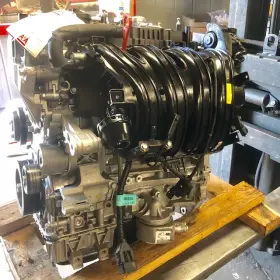
( Brand: Kia ), ( Manufacturer Part Number: 300-81034 ), ( Vintage Part: No ), ( Fuel Type: Gasoline ), ( Type: Vin, G ), ( Manufacturer Warranty: 90 Days ), ( Block Type: Straight ), ( Engine Size: 2.4l ), ( Country/region Of Manufacture: Korea, Democratic Peoples Republic Of )
Review KIA Hyundai 2.4l Engine 85k Miles fits SPORTAGE TUCSON 2014–2016
The KIA Sportage and Hyundai Tucson are compact SUV models that shared the same engine option between the years 2014, 2015, and 2016. This engine, specifically, is a 2.4-liter inline-four, Gasoline Direct Injection (GDI) unit with a model number of 81034.
The 2.4-liter engine delivers a balanced combination of power and efficiency. It generates 182 horsepower at 6,000 rpm and 177 lb-ft of torque at 4,000 rpm. These figures ensure a responsive and spirited driving experience, making it suitable for various driving conditions.
This engine features advanced technologies like Gasoline Direct Injection (GDI) and Multi-point Injection (MPI) systems. The GDI system delivers fuel directly into the combustion chamber, enhancing combustion efficiency and reducing emissions. The MPI system, on the other hand, ensures precise fuel delivery to the engine, optimizing its performance and fuel economy.
The 81034 engine is also equipped with a Variable Valve Timing (VVT) system. This technology adjusts the timing of the engine's valves based on driving conditions, allowing for optimal power and torque delivery at all engine speeds. The result is a more responsive and fuel-efficient engine.
The 2.4-liter engine is mated to a six-speed automatic transmission, offering smooth and efficient power delivery. The transmission features a Sportmatic shifting mode, allowing drivers to manually shift gears for a more engaging driving experience.
This engine has a total displacement of 2,368 cc and a bore and stroke measurement of 93.5 mm x 88.3 mm. It has a compression ratio of 10.0:1 and an aluminum block and cylinder head. The engine is also designed to meet stringent emission standards, including the US Environmental Protection Agency's (EPA) Tier 2, Bin 5 regulations.
The 81034 engine has a service interval of approximately 10,000 miles or 12 months. With proper maintenance, this engine can reach an impressive lifespan of up to 200,000 miles. However, the engine's condition and maintenance history are crucial factors in determining its longevity.
In summary, the 2.4-liter 81034 engine found in the 2014 to 2016 KIA Sportage and Hyundai Tucson models is a reliable and efficient powertrain option. With its balanced power output, advanced technologies, and long service interval, this engine offers a great driving experience for compact SUV enthusiasts.
The Kia Sportage and Hyundai Tucson, both manufactured between 2014 and 2016 with the 2.4L engine and approximately 85,000 miles, share several similarities. Both are compact SUVs from the same automotive group (Hyundai-Kia) and offer comparable features, fuel efficiency, and performance. Here are some pros and cons that might help you make an informed decision between the two.
Pros of Kia Sportage:1. Competitive pricing: Kia is known for offering competitive prices, which could make the Sportage a more affordable option.
2. Distinctive exterior design: The Sportage's exterior design might appeal more to some buyers due to its unique styling.
3. Standard features: The Sportage comes with a decent list of standard features, including Bluetooth connectivity, rearview camera, and a touchscreen infotainment system.
Cons of Kia Sportage:1. Lower resale value: Kia vehicles, in general, tend to depreciate faster than their competitors.
2. Questionable reliability: Kia has had some issues with reliability in the past, although the newer models have improved significantly.
Pros of Hyundai Tucson:1. Better resale value: Hyundai vehicles hold their value better than Kia, which could be beneficial when selling or trading in the vehicle.
2. Superior build quality: Hyundai is known for its solid build quality and attention to detail, which could result in a more durable vehicle.
3. Warranty coverage: Hyundai offers a longer powertrain warranty (10 years/100,000 miles) compared to Kia (10 years/100,000 miles for some models, 5 years/60,000 miles for others).
Cons of Hyundai Tucson:1. Slightly higher price: Hyundai's reputation for quality and better resale value might come at a slightly higher price compared to the Kia Sportage.
2. Less distinctive exterior design: Some buyers might find the Tucson's exterior design less appealing than the Sportage's.
Conclusion:Both the Kia Sportage and Hyundai Tucson are solid compact SUV options with their unique strengths and weaknesses. If you prioritize a lower price, distinctive design, and aren't too concerned about resale value, the Kia Sportage might be the right choice for you. However, if you're looking for better resale value, superior build quality, and a longer warranty, the Hyundai Tucson could be a more suitable option. Ultimately, the decision comes down to your priorities and personal preferences.
Details:
Install new thermostat gasket. Inspect and replace gaskets seals front seal, rear main valve cover gaskets, oil pan. Replace water pump. Load is curbside delivery ONLY.
Replace engine oil, oil filter, air fuel filters, coolant-antifreeze. 90 Day Replacement Warranty. Someone over 18 must be present for delivery. Drain excess oil and coolant from exhaust system.
Shipping Details. All other parts that may be provided are Accessories and Extra Parts. Daytime phone number is required load will not deliver until appointment scheduled. Exchange attached accessory items to insure proper fit mounts, intake manifold, exhaust distributor, sensors.
Install and replace timing belt if necessary, your engine has a chain it is set ready for installation. Add $80 for Lift Gate Delivery, $100 Diesel Engine Delivery. Insure the cooling system is flushed and functioning properly. No warranty is provided for any such parts that are attached, including as switches, sensors, cables, injectors, electronics, belts including timing belt/chain, hoses, water pumps, manifolds and oil pans.
Insure this engine is the same application as one being replaced.
part #: 30081034 prices
- $2659.05-$3275.40
specifications grokengines:
- for models: Sportage, Tucson
- for makes: Hyundai, Kia
- for years: 2014-2016
- brand: Kia
- mpn: 300-81034
- vintage part: No
- fuel type: Gasoline
- type: Vin, G
- manufacturer warranty: 90 Days
- block type: Straight
- engine size: 2.4l
- country/region of manufacture: Korea, Democratic Peoples Republic Of
returns grokengines:
- time: 30 Days
- paid by: Seller
- policy: Returns Accepted
general grokengines:
- Car Truck Parts Accessories > Engines Engine Parts > Engines
- condition: Used
shipping grokengines:
- class: Freight
- service: Flat Rate Freight
- cost: $359.00
- type: Fixed
- transit: 23-29 Days
payments grokengines:
- credit card: Mastercard
- other
- wallet: Paypal
seller grokengines:
- city: Orlando, Florida
- # reviews: 2693
- rating: 100.0%
offer grokengines:
- availability: In Stock
- quantity: 1
- sold: 0
- started: August 5, 2025
- options: Ship-to-home
Kia 300-81034 Is Similar To:
- Kia 10526 2021 Sorento 2.5l Engine Motor 4cyl Oem 79k Miles Lkq385534550 (47.3% similar) Clear all computer diagnostic codes from the vehicle prior to installing. No photos of the actual engine are available. To aid in installation, you get to keep your current engine and all attached accessories. If included these parts are sold as...(May 18th, 2024)
- Kia 211012gk06 Ft14-ft15 Sorento Engine 2.4l 81k Miles Runs Well (47.8% similar) Engine blocks and heads are covered under warranty.timing cover, intake manifold, throttle body, coils, fuel rail included but not warranty. Message for details. If quality control discovers any damage, a replacement with equal or lower mileage may be substituted. Please message with any...(May 18th, 2024)
- Kia 300-10354 Seltos 2021 Engine 1.6l Turbo Included (47.6% similar) Cm must be reprogrammed prior to driving vehicle...(May 19th, 2024)
- Kia 120u12bh00 14-16 Soul Gamma 1.6l I-4 Gasoline Vvc Dohc 130hp Engine 104k Oem (37.7% similar) To aid in installation, you get to keep your current engine and all attached accessories. Items which become externally damaged after item is received by customer, are not covered...(May 19th, 2024)
- Kia 300-97042 Core Short Block Engine 2.0l Vin 2 Fits 10-11 Soul (46.4% similar) Avondale, MN 55302. Transmissions: transmissions will come with the torque converter and all sensors. Do not necessarily come with and are covered under the 90-DAY warranty warrant a return. If a return is accepted please ship the item back. Axles assemblies: axle assemblies will not...(May 21st, 2024)
- Oem G6dp Kia Stinger 2018-2021 Engine Motor With Turbos Rwd 3.3t Assembly 96k (27.8% similar) This came off Kia stinger GT1 2019 3.3T v6 rear wheel drive with 96K...(May 22nd, 2024)
- Kia 300-81626 Engine 2.4l Vin 7 8th Digit Canada Emissions Fits 11 Optima (38.1% similar) Part #: Kia 642500 for sale...(May 28th, 2024)
- Hyundai 300-96116 Kia Soul 1.6l Engine 149000 Miles 2012 2013 2014 2015 2016 2017 2018 2019 (42.4% similar) I have a video of vehicle running. No warranty it is being sold as due to tested good and cheap price. Car ran great just being parted due to exterior damage 1.6L was mated a manual transmission. I don't know if there is a difference in engine from manual to auto...(May 31st, 2024)
- Kia 172w13cs00 2015 2016 2017 2018 Sedona 3.3l V6 Engine Motor 159k Vin 1 Runs (32.9% similar) Flush cooling system and refill with anti-freeze to appropriate level. Flush the transmission cooler and lines radiator with a power flush machine or an aerosol, this will insure cooling system is flowing. If there has been any damage to the item during shipping inspect see if you can still use...(May 31st, 2024)
- Hyundai 211012gk04r Genuine 2011-2015 Kia 2.4l G4kj Gdi Dohc Engine Motor 80k Mi Tested (37.3% similar) Good condition. Genuine OE oem original. There are traces of use. It is a used factory original part...(June 2nd, 2024)
- Kia 91850s9021oa Telluride Fwd 3.8l V6 Engine Motor Oem 2020 2023 (35.5% similar) This is an item that has been previously used. Color: gray kg-gravity grey exterior / black wk interior. All parts including engines, transmissions, transfer cases, differentials, batteries come with a 30 day warranty. Free shipping is available for most items within the 48 states...(June 4th, 2024)
