HYUNDAI 127R1-3CA00 Frm Engine Motor 02/17/10 4.6L V8
fits model: Genesis. make: Hyundai. year: 2010–2011.
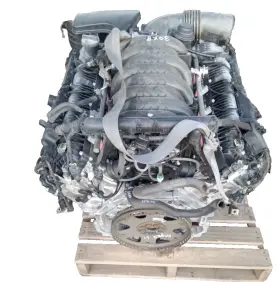
( Manufacturer Part Number: 127R1-3CA00 ), ( Type: Complete Assembly ), ( Oe/oem Part Number: G8be, 127r1-3ca00 ), ( Engine Size: 4.6 L ), ( Number Of Valves: 24 ), ( Country Of Origin: United States ), ( Fuel Type: Gasoline )
Review HYUNDAI Frm 02/17/10 Sedan 4.6l V8 Engine Motor Assembly Vin fits GENESIS 2010–2011
The Hyundai 127R1-3CA00 10 is a premium 4.6L V8 engine motor, specifically designed for use in the 2010 Genesis sedan. This powertrain is a testament to Hyundai's commitment to delivering high-performance and efficient engines to its customers.
The 4.6-liter V8 engine is equipped with a sophisticated aluminum block and aluminum heads, which contribute to its low weight and enhanced power output. The engine boasts a dual overhead camshaft (DOHC) design, allowing for optimal valve control and efficient combustion. This results in a maximum horsepower of 375 at 6500 rpm and a maximum torque of 333 lb-ft at 3500 rpm.
The 127R1-3CA00 10 engine is also equipped with a continuous variable valve timing system (CVVT), which enables the engine to adapt to various driving conditions. This technology optimizes engine performance by adjusting valve opening duration based on engine speed and load.
To ensure a clean and efficient combustion process, the engine features a multi-point fuel injection system. This system delivers fuel directly to each cylinder, allowing for precise fuel delivery and optimal engine performance. The engine also comes with a dual exhaust system, which not only enhances engine performance but also adds to the vehicle's distinctive exhaust note.
The 127R1-3CA00 10 engine is also designed with durability in mind. It features a forged crankshaft and connecting rods, which help to reduce engine wear and improve overall engine life. The engine also comes with a maintenance-free timing chain, eliminating the need for periodic timing belt replacements.
In terms of emissions, the engine meets stringent emission standards, including the ULEV (Ultra-Low Emission Vehicle) II certification. It achieves this through the use of advanced emission control technologies, such as a three-way catalytic converter and a closed-loop fuel system.
Overall, the Hyundai 127R1-3CA00 10 4.6L V8 engine motor is an impressive powertrain that delivers impressive performance and efficiency. Its advanced technologies and durable design make it a top choice for those seeking a powerful and reliable engine for their Genesis sedan.
The Hyundai Genesis 10 engine, specifically the 127R1-3CA00 4.6L V8, is an option for those seeking a powerful and relatively advanced engine. Here are some pros and cons to help make an informed decision:
Pros:1. Power and Performance: The 4.6L V8 engine delivers impressive power and torque, providing a responsive and exhilarating driving experience.
2. Fuel Efficiency: Compared to other V8 engines in its class, the Genesis 4.6L V8 is relatively fuel-efficient, delivering around 17 mpg in the city and 24 mpg on the highway.
3. Smooth Operation: The engine is known for its smooth operation and refined power delivery, making for a comfortable and enjoyable driving experience.
4. Durability: Hyundai engines are generally known for their durability and reliability, and the Genesis 4.6L V8 is no exception.
5. Affordability: Compared to similar engines from luxury brands, the Genesis 4.6L V8 is relatively affordable, especially when considering the power and performance it delivers.
Cons:1. Fuel Consumption: While the engine is relatively fuel-efficient for a V8, it still consumes more fuel compared to smaller, more efficient engines.
2. Size and Weight: The larger size and weight of the V8 engine can lead to increased fuel consumption and reduced fuel efficiency.
3. Maintenance Costs: The V8 engine may require more frequent and expensive maintenance compared to smaller, more efficient engines.
4. Environmental Impact: The increased fuel consumption and larger carbon footprint of the V8 engine may not be ideal for those concerned about the environment.
In conclusion, the Hyundai Genesis 127R1-3CA00 4.6L V8 engine offers impressive power and performance, smooth operation, and durability, but it comes with higher fuel consumption, increased maintenance costs, and a larger carbon footprint. Considering these factors, this engine may be a suitable choice for those who prioritize power and performance over fuel efficiency and lower maintenance costs.
Recommendation: If you prioritize power and performance and are willing to accept the higher fuel consumption and maintenance costs, the Hyundai Genesis 127R1-3CA00 4.6L V8 engine could be a great choice for you. However, if fuel efficiency and lower maintenance costs are your top priorities, you may want to consider smaller, more efficient engines instead.
Details:
Inspect and replace rear seal as needed, and change over sensors needed. If included, these parts are sold AS-IS with NO WARRANTY and were included to help protect the engine during storage and shipping. The part is installed or operated outside the USA. All crankshaft bolts that are drilled through sealant must be applied to avoid leaks.
Feel free to reach out with any questions. Residential Delivery: Extra shipping charges apply for residential addresses. Replace the radiator or cooler if recommended by the manufacturer.
Replace the timing belt and water pump Install replacement spark plugs wires. Please let us know in advance, or pay directly to the carrier. Inspect and replace gaskets seals front seal, rear main valve cover gaskets,oil pan. If equipped within engine oil cooler the radiator or external must be replaced.
Fill the transmission with the OEM recommended fluids. Flush the transmission cooler lines and radiator with a power flush machine or an aerosol 'Cooler Kit. In certain types of Transmissions,the TCM transmission controlling computer is incorporated with the Valve body which may require valve body to be replaced. Exchange attached accessory items to insure proper fit mounts, intake manifold, exhaust manifold, distributor, sensors.
Warranty does NOT cover labor, diagnostic,towing or rental car costs. The below installation checklist is not followed accordingly. The parts failures caused by abuse, misuse, or modifications. Clear all computer diagnostic codes from the vehicle prior to installing.
Clear all transmission computer codes in the vehicle prior to starting or operating. This will allow the oil to prime as indicated by manufacturer. Replace engine oil, oil filter, air fuel filters, coolant-antifreeze.
Ensure this engine you are purchasing is the same application as one being replaced. Examples of these non-warranty parts include switches, sensors,cables, coils, wires, injectors, electronics, belts including timing belt/chain, hoses, water pumps, brackets, intake/exhaust manifolds, oil pan sand turbos/superchargers if equipped. The recipient vehicle is converted from Private passenger use to commercial or fleet use, used for racing brother competition off-road recreational purposes. The part fails or becomes defective due to the vehicle being involved in a collision.
Transfer cases are not included with transmission from AWD automobiles. Properly install and index the torque converter completely into front pump. Ensure the purchased transmission is materially same as one to be replaced. Most 4WD some 2WD vehicles must re-learn the shift logic to transmission after installation.
Disable fuel/ignition before attempting to start engine. Remove oil pan and replace filter, remove torque converter strap and replace front seal. Ensure the cooling system is flushed and functioning properly. This will ensure the cooling system is flowing.
Service is not reimbursable. Exchange the oilcan and pick-up tube. Verify the differential portion of the transmission is full fluid. Drain excess Orlando coolant from exhaust system.
part #: 127r13ca00 prices
- $1485.00-$1665.00
specifications grokengines:
- for models: Genesis
- for makes: Hyundai
- for years: 2010-2011
- mpn: 127r1-3ca00
- type: Complete Assembly
- oe/oem part number: G8be, 127r1-3ca00
- engine size: 4.6 L
- number of valves: 24
- country of origin: United States
- fuel type: Gasoline
general grokengines:
- Car Truck Parts Accessories > Engines Engine Parts > Engines
- condition: Used
payments grokengines:
- credit card: Discover
- wallet: Google-pay
- other
shipping grokengines:
- type: Fixed
- service: Flat Rate Freight
- cost: $285.00
- class: Freight
seller grokengines:
- city: Las Cruces, New Mexico
- rating: 98.4%
- # reviews: 980
offer grokengines:
- options: Ship-to-home
- best offers: True
- started: December 28, 2025
- availability: In Stock
- sold: 0
- quantity: 1
returns grokengines:
- time: 60 Days
- policy: Returns Accepted
- paid by: Buyer
Hyundai 127R1-3CA00 Is Similar To:
- Hyundai 1d0312eu00 Engine For 2013 Elantra Used Assembly 1.8 300-81218e (41.5% similar) Engine parts express. 1.8L a 8/12 Intel approved...(May 17th, 2024)
- Hyundai 1d5712eu02 Engine For 2016 Tucson Used Assembly 2.0 300-81009a (43% similar) 2.0L a 2-16 runs good. Engine parts express...(May 17th, 2024)
- Hyundai 351.hy1p11 2011 11 Sonata Engine Cover (43.3% similar) You can ship the item back. Most items ship same day...(May 17th, 2024)
- Hyundai 10692 2012 Santa Fe 3.5l Engine Motor 6cyl Oem 58k Miles Lkq 385153420 (44.6% similar) Someone over 18 must be present for delivery. Remove all cap-plugs orifice covers. Residential address - load is curbside delivery only. Warranty does not cover labor, diagnostic, towing or rental car costs. Clear all computer diagnostic codes from the vehicle prior to installing...(May 19th, 2024)
- Hyundai 81333 2016 Santa Fe 3.3l Engine Motor 6cyl Oem 131k Miles Lkq 382794834 (45.5% similar) Inspect and replace gaskets seals front seal, rear main valve cover gaskets, oil pan. Insure this engine is the same application as one being replaced. If equipped with an engine oil cooler the radiator or external must be replaced. Replace engine oil, oil filter, air fuel filters, coolant...(May 19th, 2024)
- Hyundai 300-10139 2020 Elantra 1.6l Engine Motor 4cyl Oem 27k Miles Lkq 386382902 (49.7% similar) Warranty does not cover labor, diagnostics, towing, rental car, or any other expense related to an item being defective/damaged. This will allow the oil to prime as indicated by manufacturer. No photos of the actual engine are available. If included these parts are sold as-is with no warranty...(May 22nd, 2024)
- Hyundai 300-10248b Engine 2.4l Vin C 8th Digit California Emissions Fits 11 Sonata (36.5% similar) Part #: hyundai 1310986 for sale...(May 22nd, 2024)
- Hyundai 300-10593 2019-2020 Nexo Electric Traction Motor Assembly 38k Miles (47.3% similar) When dismantled, the car will again be brought up to operating temperature ensure that engine is running properly. All engines are sold without starter, alternator, steering pump, turbo, supercharger, ac compressor, coil packs, distributors, plastic engine covers, throttle bodies and ecu...(May 22nd, 2024)
- Hyundai 300-10202 2018 Kona 2.0l Engine Motor Oem 62k Miles Lkq 383258814 (44.7% similar) Examples of these non-warranty parts include switches, sensors, cables, coils, wires, injectors, electronics, belts including timing belt/chain, hoses, water pumps, brackets, intake/exhaust manifolds, oil pans and turbos/superchargers if equipped. This will allow the oil to prime as indicated...(May 23rd, 2024)
- Hyundai 300-81058b Engine 1.8l Vin E 8th Digit California Emissions Fits 14-16 Elantra (33.3% similar) No expedited shipping is available at this time. Let us show you how its done. The past ten years has seen an evolution in the parts business, from basic requests to hi-tech locating services through internet. Ace has become well...(May 24th, 2024)
- Hyundai G4kf 2013-2014 Genesis Coupe 2.0t Turbo Engine With 6 Speed M t Trans 68k (42.4% similar) 6 speed manual transmission. Complete head and block 2.0T. Up for sale a used low mileage / fully functional 68K miles, 2013 -2014 hyundai genesis coupe 2.0T G4KF turbo engine w/ 6 speed m/t. And all other accessories attached to the motor as pictured. Turbo charger...(May 26th, 2024)
